01, Storage
Handleless storage that works
Updated:
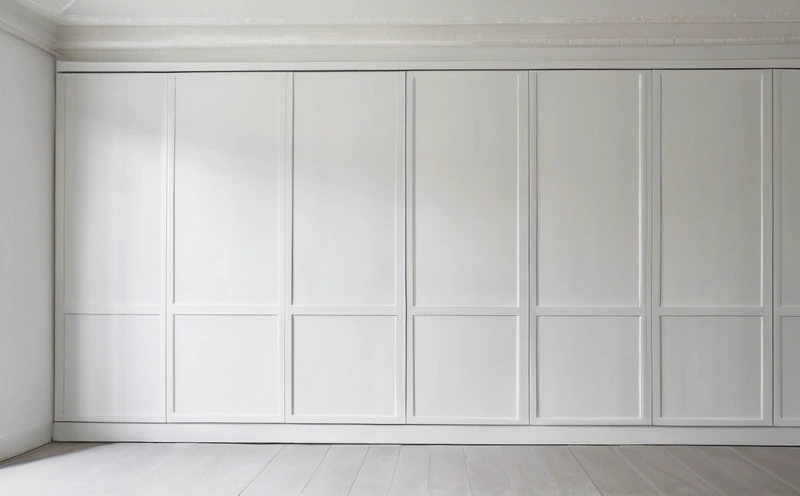
Handleless storage fails in public. A screwdriver tightens a loose handle in ten seconds. A push latch that stops latching leaves a wall of doors standing open by 4 mm, and the flat plane was the whole reason for deleting the handles. The choice between a push latch and a finger pull rail is a maintenance decision first and a visual decision second.
How does a push to open latch work, and how many cycles before the spring fails?
A mechanical push to open latch holds a sprung plunger behind the door front, releases at roughly 20 N of finger pressure, and throws the front forward 12 mm to 14 mm, enough grip for four fingers. A door opened six times a day passes 4,380 cycles a year and 21,900 cycles in five years.
Push to open disagrees with soft close. A soft close hinge damps the last 40 mm of travel, and a plunger that has shed a third of its spring force cannot beat that damping, so the front drifts back and reads as shut while the catch sits unengaged. Hardware makers sell matched latch and hinge sets for that single reason. A latch paired with the wrong hinge produces a run of doors standing 3 mm proud in no pattern a reader can predict.
Push latches hold alignment on fronts up to 600 mm wide and 8 kg. A front taller than 900 mm in 19 mm board flexes under the press, the plunger takes the load off centre, and the catch misses. A wardrobe front of 2,300 mm needs two latches, set 700 mm and 1,600 mm above the floor and matched in depth to within 1 mm of each other.
Electric push latches solve the tall front problem and buy a power problem. An electric drive throws a front of up to 20 kg by 25 mm on a touch under 5 N, draws 2 W to 4 W standing, and needs a transformer inside the carcass with 40 mm of clear space behind the back panel. Budget a drive replacement between year 8 and year 12. A discontinued drive unit takes the matching fronts out of service with it.
What grip depth does a finger pull rail need, and what does the recess cost?
A finger pull rail is a continuous aluminium C profile recessed behind the top edge of the front, 20 mm high with 30 mm to 40 mm of grip depth. The profile carries no moving parts, so the profile cannot lose spring force, drift out of adjustment or stop working after a fixed cycle count.
The rail charges for that reliability twice. A recess at the top of a drawer takes 20 mm to 25 mm off the internal height of that drawer, which turns a 90 mm cutlery drawer into a 68 mm cutlery drawer and stops a standard knife block standing upright. A kitchen rail also gathers grease along a horizontal ledge. Wiping six metres of profile takes about four minutes a week, near 3.5 hours a year.
A J profile machined into the front edge deletes the ledge. The J profile gives 35 mm of grip without a separate extrusion and keeps the full internal height of the drawer. Painted MDF raises the price of a J profile, because the exposed machined edge takes primer, filler and two topcoats before the edge matches the face.
Push to open or a finger pull: which mechanism suits which front?
Five handleless mechanisms cover almost every fitted job: the mechanical push latch, the electric push latch, the aluminium C profile rail, the J profile cut into the front edge, and the recessed groove in the door face. Each mechanism trades opening force against internal volume, and each mechanism fails in a different place.
| Handleless mechanism | Opening action | Internal volume lost | First failure and when |
|---|---|---|---|
| Mechanical push latch | 20 N press, 12 mm to 14 mm throw | None | Spring force drops, front sits 3 mm proud, from 4,000 cycles |
| Electric push latch | Touch under 5 N, 25 mm throw, 2 W to 4 W standing | 40 mm of carcass depth for the drive | Drive unit or transformer, budget year 8 to year 12 |
| Aluminium C profile rail | 30 mm to 40 mm grip depth, no press | 20 mm to 25 mm off drawer height | No moving part to fail, grease ledge wants a weekly wipe |
| J profile cut in the front | 35 mm grip depth, no press | None | Painted MDF edge chips, typically year 3 onward |
| Recessed groove in the door face | 25 mm grip on a 45 degree cut | None | Matt finish polishes where fingers land, from month 12 |
Wet hands settle most kitchen fronts. A push latch needs a clean flat palm and a deliberate 20 N press, so a cook holding a full tray or wearing an oven glove opens a drawer with a hip and misses the catch. Fronts opened a few times a week, such as a full height wardrobe, run on a mechanical push latch for a decade without complaint.
What gap tolerance do handleless fronts need across a run?
Handleless fronts publish every setting-out error. A run of eight fronts holds a shadow gap of 3 mm, tolerance plus or minus 0.5 mm, because the eye reads a shadow gap as a straight line and a line that widens by 1 mm shows at three metres in raking daylight.
Carcasses have to sit level within 2 mm across the whole run. A floor falling 8 mm over 4 m needs adjustable feet with 25 mm of travel and a plinth scribed to the fall. A wall out of plumb by 10 mm over 2.4 m needs a 20 mm scribe strip at the end of the run, drawn at design stage rather than discovered by a fitter on a Friday.
- Shadow gap between fronts: 3 mm, tolerance plus or minus 0.5 mm
- Carcass level across the run: within 2 mm
- Push latch limit: front up to 600 mm wide and 8 kg
- Finger pull profile: 20 mm high, 30 mm to 40 mm grip depth
- Scribe allowance at each end of a run: 20 mm
- Adjustable foot travel over an uneven floor: 25 mm
Which handleless parts fail within two years?
Four parts of a handleless run degrade on a schedule: hinges sag, matt lacquer polishes, painted MDF edges chip, and push latch springs weaken. Cabinet hinges carry cycle ratings between 50,000 and 200,000 open close cycles, and a door opened six times a day reaches 50,000 cycles in 23 years.
Hinges sag before any rating runs out. A 2,300 mm door hung on four hinges drops 1 mm to 2 mm at the leading edge inside eighteen months, which shuts the gap at the bottom and opens the gap at the top. Cam adjustment on the hinge recovers most of the drop in five minutes per door, and a run of eight doors takes 40 minutes once a year.
Matt lacquer polishes where knuckles land, so a band roughly 200 mm wide beside every push point turns slightly glossy inside the first year. Nanotech laminates resist the polish better than lacquer and close shallow scratches under heat. Painted MDF chips along the finger pull when the profile stops 2 mm short of the board, which leaves the softest part of the panel taking a fingernail six times a day.
How many linear metres of storage does one occupant need?
Storage is planned in linear metres of wall, not in cubic capacity, because linear metres are the quantity a wall can supply. One adult needs 1.2 m to 1.5 m of 600 mm deep wardrobe, so two adults sharing a bedroom need 2.4 m to 3.0 m, split half at 1,000 mm hanging height and half at 1,800 mm.
A living room needs 2.0 m of 400 mm deep closed storage at 800 mm high for a household of two, plus 0.5 m for every additional occupant. Closed storage of that length absorbs cables, documents, games and the objects that otherwise settle on the floor. An entrance needs 0.45 m per occupant at 350 mm deep, so a household of two plans 0.9 m and a household of four plans 1.8 m.
Measure the current contents before choosing a storage length. Place every garment on the bed, count each hanging item, allocate 25 mm of rail per shirt and 50 mm per coat, and add 20 per cent slack. A wardrobe filled to 100 per cent on day one becomes a chair covered with clothes by month three, making the chair the visible failure of a storage decision taken two years earlier. The daily systems for minimal rooms help prevent planned storage from overflowing into the room.
Next